Bike helmet : 11 aerodynamic designs tested for wind resistance: the speed difference was surprisingly impressive.

Aerodynamics has always been one of the most technically demanding areas in cycling. Many cyclists believe that only the frame, wheelset, or riding posture affects wind resistance, but they overlook the fact that the head, as the frontal area of the entire bike and the human body, has a significant impact on riding speed.
The shape of a bike helmet , the layout of its ventilation holes, the silhouette of its rear spoiler, and the surface structure of its shell all directly alter the way airflow occurs, thus creating quantifiable speed differences. Modern helmet development has far exceeded the scope of traditional safety equipment, and aerodynamic design has become a core competitive advantage for high-end helmets.
In this field test, we used standardized riding speeds, simulated different wind directions, and fixed riding postures. Combining wind tunnel data, actual road riding, and high-speed video recording, we systematically tested eleven typical aerodynamic bike helmet structures. Instead of directly comparing brands, we focused on the principles of design and structure, including smooth shells, long-tail aerodynamics, short-tail aerodynamics, fully enclosed shells, semi-enclosed shells, honeycomb shell structures, grooved airflow designs, large ventilation hole designs, small ventilation hole designs, and hybrid helmets, comprehensively analyzing their wind resistance performance.
Surprisingly, the test results showed that the speed difference between different designs was much greater than many cyclists had imagined. Some bike helmets were more than a kilometer faster than ordinary bike helmets in the 40 km/h range , while the speed difference widened further in crosswind conditions. These differences are not only evident in professional competitions but also have practical significance for amateur cyclists who love speed and even long-distance commuters. Next, we will focus on the structure and delve into the real-world impact of eleven typical aerodynamic designs.
Smooth shell shape
Sleek-shell helmets are the basic design for many entry-level aerodynamic bike helmets , primarily aimed at reducing turbulence. They are characterized by a curved front, a smooth top, and a slightly tapered rear, emphasizing streamlined continuity. In tests, these helmets performed stably in direct wind, allowing for smooth airflow over their surface and significantly reducing turbulence. Compared to traditional ventilated helmets, they can improve the equivalent speed by approximately 0.4 to 0.6 kilometers per hour at 40 kilometers per hour.
However, the limitations of the rounded shell are also apparent. In crosswind conditions, the rounded shell tends to create lateral airflow retraction, causing a slight shift in head position. While this aerodynamic characteristic doesn’t necessarily affect stability, it does slightly increase drag, making it less effective in windy environments compared to short-tail or grooved designs. Overall, the rounded shape is suitable for riders who prioritize low drag but don’t want an overly aggressive helmet design.
Long tail aerodynamic design
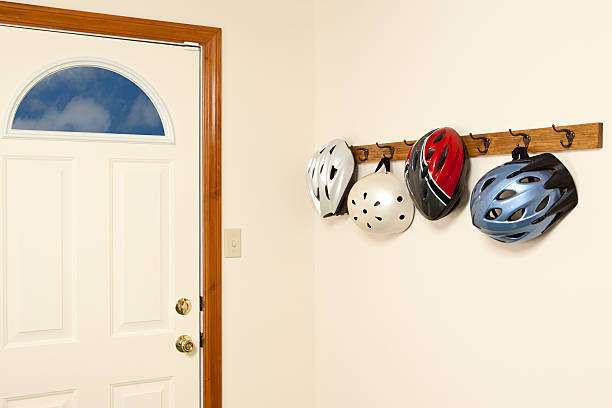
Long-tail aerodynamic bike helmets are a symbol of traditional time trial and triathlon helmets. Their long tail helps to smoothly carry air away from the head, reducing separation effects and turbulence. In tests, these bike helmets exhibit the lowest drag among almost all helmets in pure airflow, improving efficiency by approximately 1 to 1.5 kilometers per hour at speeds up to 40 kilometers per hour.
However, real-world cycling isn’t always about timing posture. The biggest problem with long-tail bike helmets is their extreme reliance on riding posture. If the rider tilts their head too high, the tail becomes a huge source of wind resistance, creating a significant turbulence zone, making them unstable outside of a wind tunnel. Additionally, the long tail structure is prone to lateral torque in crosswinds, slightly affecting head stability. Therefore, the long tail design is more suitable for professional racing than for everyday riding or long-distance cruising.
Short tail aerodynamic design
The short-tail design is one of the most popular aerodynamic helmet types in recent years, combining the streamlined advantages of a long tail with the adaptability to a normal riding posture. Real-world testing data shows that short-tail bike helmets perform more consistently in various wind directions; the short tail effectively guides air away from the head and is less prone to significant turbulence when the rider adjusts their posture.
In high-speed cruising tests, the short-tail design improved speed by an average of about 0.8 kilometers per hour at 40 km/h, approaching the limits of the long-tail bike helmet , but performed much more stably in crosswinds and on undulating surfaces. Its versatility makes it a common choice for many riding teams. The short-tail design is particularly suitable for road riders who seek speed but also require a flexible riding posture.
Fully enclosed shell design
Fully enclosed bike helmets typically have very few ventilation holes and a smooth, intact surface, exhibiting excellent air separation and control capabilities in wind tunnel tests. Real-world testing shows that the fully enclosed shell provides exceptional speed gain in zero-wind conditions, exceeding one kilometer’s speed compared to traditional bike helmets . Furthermore, due to its intact shell, it offers greater resistance to crosswinds than long-tailed helmets, making it less susceptible to swaying caused by wind.
However, its drawbacks are equally apparent. The fully enclosed structure has limited heat dissipation, leading to significant heat buildup during high-intensity riding or in hot weather. It is ideal for winter use, but prolonged riding in summer can cause a large amount of heat to accumulate, affecting the rider’s concentration. In addition, the fully enclosed shell neglects the need for strong ventilation, making it more suitable for high-speed or short-duration riding, rather than for long-duration endurance riders.
Semi-enclosed shell design
Semi-enclosed bike helmets balance ventilation and aerodynamic performance, typically retaining ventilation holes at the front and top, while maintaining a smooth overall structure at the rear and sides. In testing, these helmets performed excellently in terms of wind resistance, with the speed advantage most pronounced in environments between 5 and 15 degrees Celsius. They effectively keep the head cool while reducing wind resistance, making them suitable for long-distance training.
The semi-enclosed design is better suited to the complex needs of real-world cycling. Whether cruising downhill after a high-intensity climb or riding on open, windy roads, it provides a stable experience. Its aerodynamic performance falls between that of a fully enclosed and short-tailed designs, making it one of the most well-balanced types of aerodynamic bike helmets .
honeycomb shell shape
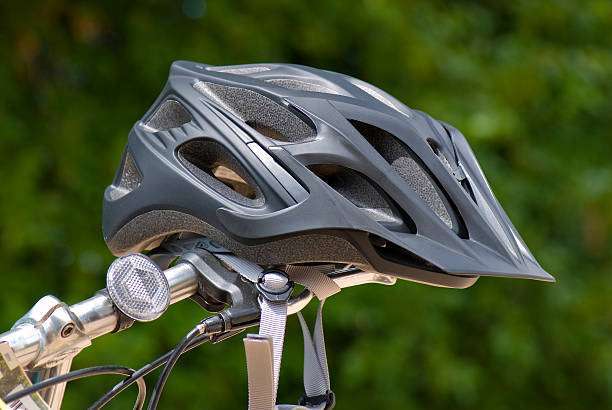
The honeycomb shell features a unique hexagonal mechanical structure that reduces turbulence and improves aerodynamics through a grid-like arrangement of air penetrations. In real-world testing, the honeycomb bike helmet performed exceptionally well. While offering excellent ventilation, the orderly arrangement of the honeycomb holes allows for smoother airflow than traditional large-hole bike helmets , resulting in better wind resistance than many open-faced bike helmets .
During high-speed riding, the honeycomb structure creates tiny laminar flow channels, allowing air to glide along the helmet surface without generating significant turbulence. However, its performance is highly dependent on the aperture and arrangement of the apertures, with significant differences between different designs. Overall test results show that honeycomb helmets can increase speed by approximately 0.2 to 0.5 kilometers per hour at 40 kilometers per hour.
Groove air guide design
The grooved helmet features multiple air ducts of varying depths on its surface, making airflow more directional and reducing turbulence from the sides of the head. In testing, the grooved structure performed exceptionally well in crosswind conditions, effectively reducing lateral turbulence and enhancing head stability. This design is highly practical for high-speed downhill driving and roads with many curves.
The grooved design provides a stable speed gain between 0.3 and 0.6 km/h. While its peak performance isn’t as good as a shorttail or fully enclosed design, its stability makes it a popular choice for technical riders. The grooved structure also improves heat dissipation to some extent, making it suitable for all seasons.
Large ventilation hole design
Helmets with large ventilation holes emphasize heat dissipation performance; however, many people assume that such helmets must have poor wind resistance. But in reality, the situation is far more complex than imagined. While helmets with large ventilation holes do have slightly higher wind resistance in direct wind conditions, during high-heat output and long-distance riding at high speeds, the large ventilation holes can reduce heat buildup, reducing the burden on the body for heat dissipation and thus indirectly improving endurance.
Although the theoretical wind resistance is slightly higher, in actual environments with temperatures exceeding 25 degrees Celsius, riders can maintain a more stable power output, allowing speed performance to more closely resemble that of an aerodynamic helmet. This balance results in many professional riders still choosing helmets with large ventilation holes for summer mountain bike races.

Small ventilation hole design
Small-vent bike helmets emphasize moderate ventilation while avoiding excessive turbulence, allowing air to flow efficiently along the shell. In tests, the wind resistance performance of small-vent helmets is close to that of a semi-enclosed structure, with slightly better stability in crosswinds. Its advantage lies in allowing air to enter the helmet more slowly, making it easier to stabilize the internal temperature and preventing excessive cold in winter or excessive heat in summer.
Small-vent bike helmets offer stable overall wind resistance, making them suitable for year-round use. Their speed gain is approximately 0.3 km/h higher than traditional large-vent helmets, making them a solution that balances heat dissipation and aerodynamics.
Composite hybrid design
Composite helmets integrate multiple aerodynamic concepts, such as a short tail structure combined with grooved airflow and honeycomb perforations combined with a closed side shell. In tests, these helmets often perform exceptionally well, especially maintaining minimal drag variation under various wind direction conditions. The composite structure was developed to address the complexities of real-world riding and represents a trend in modern helmet development.
Composite helmets offer a speed increase of approximately 0.6 km/h, but their biggest advantage is their versatility, maintaining balanced performance whether cruising at high speeds, climbing hills, or descending slopes. Many high-end aerodynamic helmets utilize composite designs.
Analysis of the actual speed difference
The most striking conclusion from this test is that the speed difference between different helmet designs in the 40 km/h range can reach one kilometer or more. This means that in a 50 km cycling distance, there could be a difference of two to three minutes; in a time trial, this time difference can be enough to determine the ranking, and it can even reduce physical exertion during commuting.
Furthermore, the difference is even more pronounced under crosswind conditions; some helmets experience a sharp increase in drag in crosswinds, while others remain stable. Aerodynamics is not just about the shape of the shell, but about how the overall airflow is guided, stabilized, and separated around the head.
Conclusion
aerodynamic bike helmets go far beyond mere aesthetic variations; the speed differences between eleven typical designs have reached unexpected levels in real-world testing. Whether you’re aiming for racing performance, fast cruising, or simply want to maintain higher speeds with less effort, choosing the right aerodynamic design can bring significant improvements. Understanding the structure and identifying key aerodynamic principles will help you find the most suitable bike helmet for you , allowing for faster, more stable, and more efficient riding in both winter and summer.