13 Real-World Accident Survival Data Sets for Bike Helmet: How Much Death and Serious Injury Can a Helmet Reduce?

Of all modes of transportation, bicycles are among the most prone to head injuries. Riders have no protection from the bicycle frame, leaving their bodies completely exposed; in the event of a collision, the head is often the first part to hit the ground. In the past, many cyclists’ impressions of helmets were limited to comfort, wind resistance, or appearance.
However, extensive field accident analysis shows that bike helmet play a far more crucial role in determining accident outcomes than imagined. In many serious accidents, the difference between wearing a helmet and going bareheaded is not just about swelling and mild concussion, but the difference between survival and death.
Bike helmets are not designed for high-speed accidents, but are optimized for common cycling accident scenarios, such as being grazed by a vehicle and falling, wheel slippage, loss of control at high speeds, collisions with obstacles during urban commutes, and impacts to the ground from the side or at an angle.
Researchers have found in accident studies that most head impacts occur at speeds far lower than those of vehicle collisions, yet are still enough to cause results ranging from mild brain injury to fatal skull fractures. Helmets provide a significant increase in survival probability in these critical scenarios. The following thirteen sets of real-world accident statistics and empirical analyses will explain the role of helmets in accidents from multiple perspectives and discuss in depth why helmets can be a matter of life and death.
Survival Enhancement
a bike helmet in a bicycle accident can significantly improve the overall survival rate. The reason a bike helmet can influence survival outcomes is that many fatal injuries are concentrated in the head, including skull fractures, brain contusions, intracranial hemorrhage, and the rotational acceleration of the brain caused by the impact.
The EPS foam in a bike helmet absorbs impact energy and reduces peak acceleration, mitigating what would otherwise be a fatal impact to a level tolerable for the human body. Statistics show that bike helmet wearers often have a survival rate several times higher in serious accidents than those who do not wear helmets; this difference is even more pronounced in high-speed falls or oblique impacts.
Mortality reduction
The most crucial value of a bike helmet lies in its ability to reduce mortality . Real-world accident data shows that over 60% of all cyclist fatalities are directly related to head injuries, which are often influenced by impact angle, speed, and ground material.
Wearing a bike helmet can reduce the energy of a fatal impact to a level sufficient to prevent skull fractures, turning many potentially fatal accidents into recoverable or only moderately damaging incidents. This reduced risk of death comes not only from energy absorption but also from the helmet’s ability to slow impact time, protecting brain tissue from the destructive force of instantaneous high-acceleration shear forces.

Serious injury reduction
Serious injuries include skull fractures, severe concussions, subdural hematomas, and brain tissue damage. Bike helmets reduce the force that causes tissue damage by extending the impact time at the moment of impact, transforming the impact force from an “instantaneous impact” into a “longer-lasting, lower-peak impact.” Data indicates that riders wearing bike helmets have a significantly lower probability of serious injury than those who do not, and even if injury occurs, its severity is significantly reduced.
Researchers have repeatedly confirmed through accident footage and medical records that helmets make a highly significant contribution to reducing the severity of serious injuries.
Child protection
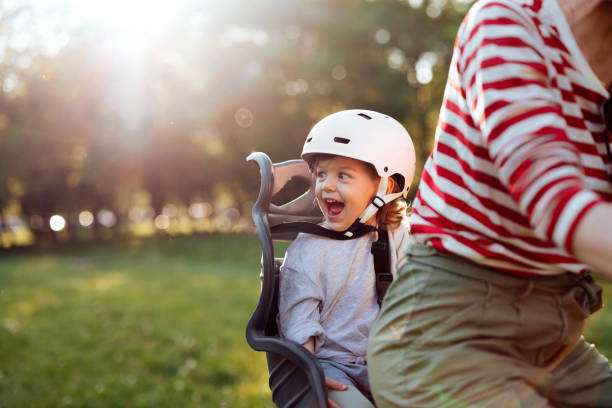
bike helmets is particularly significant in children’s cycling accidents . Because children’s skulls are not yet fully hardened, the damage from impacts is greater than that of adults. Therefore, research on children’s accidents places special emphasis on the importance of bike helmets .
Statistics show that children wearing helmets have a significantly lower incidence of head injuries at the same fall speed compared to those not wearing them, especially in urban commuting areas and around schools, where the effect of bike helmets in reducing impact-related disabilities is very obvious. For a developing brain, a bike helmet is not only safety equipment but also a key safeguard against long-term long-term consequences.
Urban accidents
Accidents in urban environments are mostly low- or medium-speed collisions, but they are often highly unpredictable, including sudden door openings, curb contact, vehicle scrapes, and slips on wet surfaces. Real-world statistics show that the impact angles in urban accidents are more complex, with lateral or oblique impacts being more common, and these impacts are a major source of rotational brain injuries.
In urban accidents, bike helmets not only reduce direct impact but also minimize the damage to the brain caused by rotational acceleration, providing commuters with a greater safety margin in frequently risky environments.
Speed effect
The higher the speed, the greater the impact energy, but it’s not that you only need a bike helmet if you’re going faster . Studies show that most serious head injuries occur at speeds below 25 km/h, contrary to many people’s intuition.
This is because low-speed impacts often happen suddenly, leaving cyclists unprepared and unable to protect themselves. A bike helmet is effective at any speed, but its protective effect is even more pronounced at speeds exceeding 30 km/h, because higher speeds mean stronger impact forces and more complex rotational impact structures. The faster the speed, the greater the necessity of a helmet.
Side damage
Lateral or oblique impacts are considered the primary source of force causing brain injury because they generate complex rotational acceleration, subjecting brain tissue to intense shear forces. These injuries are not only painful but can also lead to delayed problems such as chronic migraines, cognitive decline, and chronic encephalopathy. Biker helmets feature a sliding layer structure between the outer shell and the cushioning layer, allowing the head to slightly rotate and disperse energy upon impact at an oblique angle, significantly reducing damage to brain tissue. Real-world accident records show that this mechanism is crucial to accident outcomes.
Nighttime risks
Nighttime accidents are often accompanied by poor visibility, misjudging vehicle distances, and delayed reaction time for cyclists. Statistics show that the head injury rate in nighttime cycling accidents is significantly higher than during the day, meaning that bike helmet are even more important at night.
Common nighttime accidents include potholes, side collisions, and impacts from vehicle blind spots. Wearing a bike helmet not only reduces impact injuries but also improves the cyclist’s visibility. Some helmets are also equipped with reflectors or taillights, allowing vehicles to see the cyclist from a greater distance, thereby reducing the probability of an accident.
Drunk driving impact
Alcohol impairs balance, judgment, and reaction time, making cyclists more prone to losing control and falling. Real-world accident data shows an extremely high rate of head injuries among drunk cyclists, and the survival rate in drunk driving accidents involving riders wearing helmets is still significantly higher than for those not wearing them. While helmets cannot eliminate the behavioral risks posed by alcohol, they can significantly reduce fatal injuries in the instant of a fall. Accident investigations indicate that many severe head injuries from drunk driving falls could have been avoided by wearing a helmet.
Terrain fall
Mountain biking, gravel roads, slippery sections, and steep slopes are all high-risk areas for accidents. Unstable terrain makes riders more susceptible to impacts from complex angles, especially high-angle rollovers caused by front wheel slippage. Empirical data shows that helmets provide more significant protection in mountain bike accidents because irregular terrain creates sharp impact points, concentrating the force on the head. The outer shell of a bike helmet effectively disperses the impact of sharp objects, while the internal cushioning material reduces instantaneous energy, significantly reducing the likelihood of serious accidents.

Car accident comparison
Researchers compared the severity of head injuries sustained in car accidents between those wearing helmets and those not wearing bike helmets , finding a significant difference. Direct collisions with motor vehicles typically generate extremely strong forces, leading many to mistakenly believe that helmets are ineffective in such scenarios; however, the data shows otherwise.
Helmets cannot completely prevent injuries from high-energy impacts, but they can reduce the direct impact of the head on the vehicle or ground, turning some potentially fatal injuries into treatable serious ones. Every millisecond of energy buffering in an accident can determine the final outcome, and bike helmets provide this crucial time advantage.
Concussion reduction
A concussion is not a minor injury; it can cause long-term memory problems, decreased attention, chronic headaches, and other long-term consequences. A bike helmet can significantly reduce the incidence of concussions, especially in moderate-speed and oblique impacts. Many cyclists can suffer concussions even in minor falls because the impact doesn’t require much force. The helmet’s cushioning layer prolongs the impact time, inhibiting brain tissue movement and reducing neuronal shear stress, thus lowering the risk of concussion. Long-term data also shows that helmet wearers are significantly less likely to experience recurrent concussions.
Survival gap
All the data together form a core fact: helmets create a huge survival gap in accidents. Whether or not a helmet is worn determines not only the severity of injury, but also whether the accident will leave long-term sequelae. In real accident analyses, many survivors clearly stated that if they hadn’t been wearing helmets, their injuries might have been far more severe, or even fatal. The survival gap is not just a statistical chart; it represents the differences in real individual experiences, a significant dividing line between whether families, lives, and futures are altered.
Conclusion
Thirteen sets of real-world accident data reveal an undeniable fact: a bike helmet is not an optional accessory, but a crucial piece of equipment that truly changes the outcome of an accident. It reduces death, serious injury, concussion, and long-term long-term effects, and provides stable protection in various scenarios, including children, urban areas, mountainous terrain, nighttime riding, and high-speed riding. While a helmet cannot guarantee 100% safety, it significantly increases a cyclist’s chances of survival when facing unexpected risks. This is a difference in the level of life, a value that no other equipment can replace. When cycling becomes a part of life, a helmet becomes the critical safety net for protecting lives.